



Most people think about the current Supreme Court as a 6-3 court: six Republican appointees, three Democratic appointees; six conservatives, three liberals. Simple as that.
Sarah Isgur — the editor of SCOTUSBlog, host of the “Advisory Opinions” podcast, and a fixture of the conservative legal world — thinks that’s all wrong.
In her fascinating new book “Last Branch Standing,” Isgur argues that the popular way of thinking only takes into account the court’s ideological axis. But there’s another axis that is just as influential when predicting how the justices will rule, she says: how institutionalist each justice is.
The court isn’t 6-3, according to Isgur. It’s 3-3-3, with three liberals (Sonia Sotomayor, Elena Kagan, and Ketanji Brown Jackson); three institutionalist conservatives (John Roberts, Brett Kavanaugh, and Amy Coney Barrett); and three non-institutionalist conservatives (Clarence Thomas, Samuel Alito, and Neil Gorsuch).
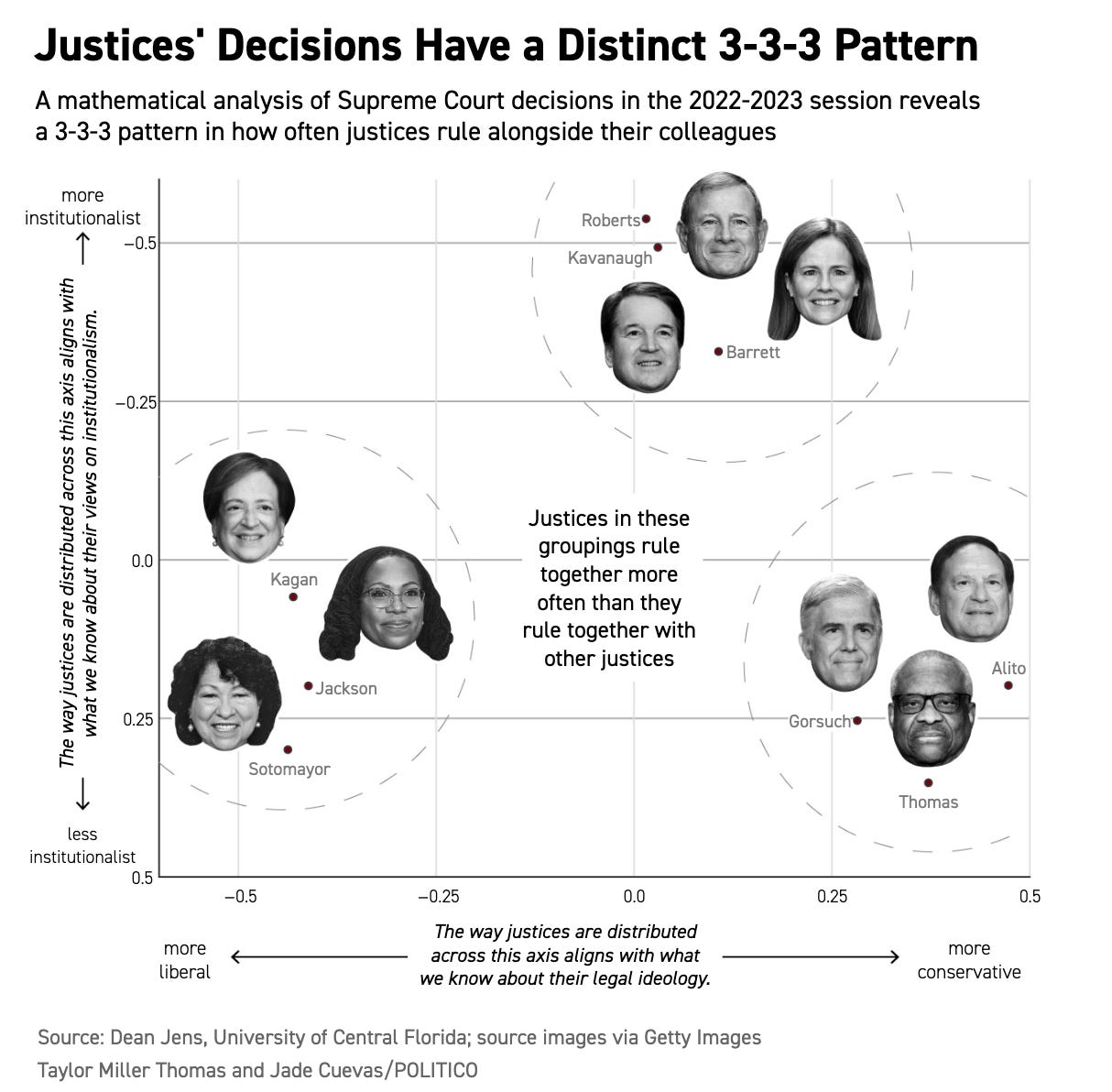
Last term, only 15% of the court’s decisions were ideologically divided along 6-3 lines, Isgur points out. And the other 85% aren’t simply niche disputes. Just last week, the court ruled 8-1 that a Colorado ban on conversion therapy should be considered as a potential First Amendment violation, with Jackson splitting from Kagan and Sotomayor as the lone dissenter. In 2024, the court ruled 6-3 that Republican-led states couldn’t sue the Biden administration over alleged social media censorship — but the three dissenters were Thomas, Alito, and Gorsuch, with the conservative majority splintering.
Jackson, Thomas, Alito, and Gorsuch are all less institutionalist than their ideological bedfellows. You can’t understand the court — and the divisions that frequently pop up within the typical ideological groupings — without understanding this institutionalist dimension, Isgur argues. (And presidents often don’t understand it, which is why their nominees don’t always end up as they hoped. But you can.)
Today’s newsletter, my latest “Book Club” feature, is an interview with Isgur. A preview of the interview is available for everyone; the full video is available for paid subscribers.
In the interview, Isgur and I discuss:
Why the court is really 3-3-3 and how understanding these divides will help you predict how some of the court’s biggest cases will shake out
How the Bushes ended up nominating the Trumpiest justices on the court (Thomas and Alito), while Trump ended up nominating three justices who have repeatedly ruled against him
Whether Alito will retire this year and who Trump might nominate in his place
The future of the conservative legal movement: can originalism survive populism?
How she would reform the Supreme Court (and why she isn’t a fan of term limits)
Which members of Congress would make the best justices
And more!
I highly recommend “Last Branch Standing” if you’re looking to understand the Supreme Court as an institution and the nine justices as people. Isgur is very funny, in the book and our interview — and in “Last Branch Standing,” she goes justice by justice, giving you a great sense of who each of these people are: which justice is the best poker player (Kagan) and which one is low-key an animal rights activist (Alito). And that’s in addition to making some very important points about the court’s role in American life, and how it often gets covered incorrectly by the media.
“Advisory Opinions,” which Isgur hosts, and SCOTUSBlog, which she edits, are also great resources for following the court.
I know many of you are very interested in the Supreme Court and its internal dynamics (especially this week, when one justice had to apologize to another for personal comments she made about him). I think you will find this book and conversation clarifying.


