


In race after race across the country, Democratic candidates are running into the same dilemma.
They said things in, roughly, the years between 2019 and 2021 — about opening the border, about defunding the police, about God being nonbinary — that they no longer seem so proud of.
Should they recant these positions to reassure swing voters, or double down to reassure their base? Increasingly, many Democrats are choosing Option C: dodging these questions entirely.
Perhaps the most prominent example of this has been Rep. Alexandria Ocasio-Cortez (D-NY), who recently waved off some of the more left-wing stances that she and others took around this time. “Woke 1 was crazy,” Ocasio-Cortez shrugged to ABC News earlier this month, quoting a New York City councilman.
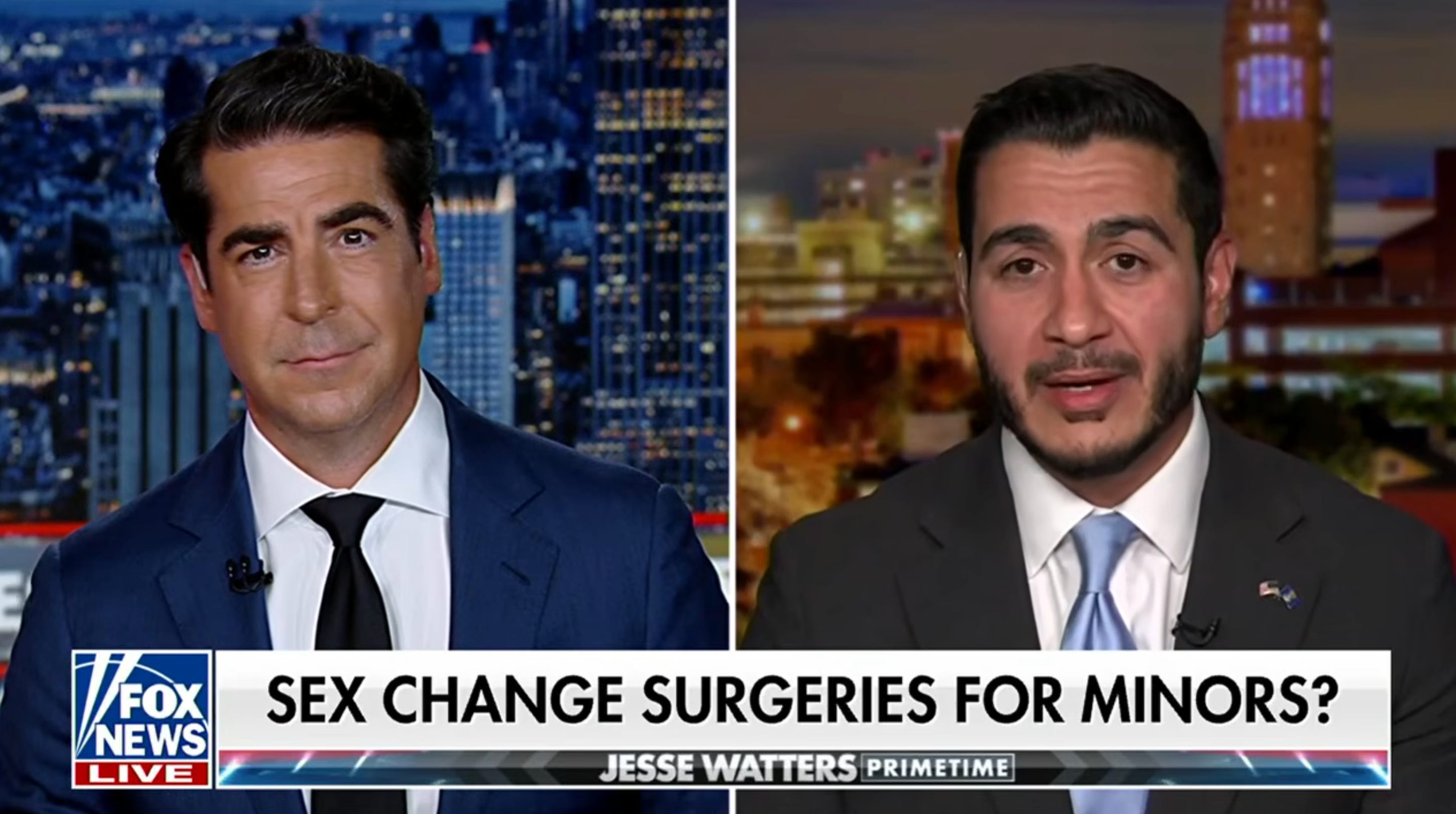
Abdul El-Sayed tried a similarly evasive strategy this week in an appearance on Fox News. As host Jesse Watters pressed El-Sayed on many of his past positions, the Michigan Democratic nominee opted each time to deflect the question.
How would El-Sayed go about enforcing immigration law? “When I travel the state, and I have traveled my state, more people are asking me about how they’re going to afford their gas and groceries,” El-Sayed responded. “They’re not asking me about immigration.”
Does he still believe that the NFL is racist? “The bigger issue that we have for football right now is I looked at ticket prices to try and go and see a game with my family. It’s astronomical, through the roof.”
Should minors be allowed to have gender transition surgeries? In the interview’s most viral segment, El-Sayed reframed the question by instead asking if Watters was circumcised. (He was.)
Watching El-Sayed bob and weave, I couldn’t help but think of yet another Democratic candidate who ventured into the conservative lion’s den when gearing up for a high-stakes general election.
In her high-profile sit-down with Fox News in October 2024 — the highest-rated non-primetime interview in the history of cable news — Harris was similarly pressed by host Bret Baier to account for a number of her 2020-era (“Woke 1”) stances.
Harris’ tactics were largely the same as El-Sayed’s. Asked, for example, about her previous support for taxpayer-funded transition surgeries for transgender inmates — the subject of a ubiquitous Trump ad — Harris declined to say where she now stood (merely saying she would “follow the law,” without saying what she wanted the law to be), then tried to tag the other side as hypocrites (suggesting that the Trump administration had allowed such surgeries), then tried pivoting to safer ground (talking about economic policy).
These deflections didn’t work for Harris, and so far, they don’t seem to be working for El-Sayed. A recent series of polls from Fox’s well-respected, non-partisan polling unit found that El-Sayed is the only battleground Democratic Senate candidate whose favorability rating is underwater (and 13 points underwater, at that).
According to the same poll, a majority of Michigan voters (54%) are concerned that El-Sayed’s positions are “too extreme.” (Similarly, according to a 2024 New York Times poll, 47% of the electorate viewed Harris as “too liberal,” compared to 32% who said that Trump was “too conservative.”)
So, how should Democrats handle questions about their past positions, which are only bound to grow louder as 2026 turns to 2028?
David Clementson is an expert in the Art of the Dodge. He is a former political operative who used to train candidates in answering (or ducking) questions. Now, he is a professor of political communications at the University of Georgia, who has made this area into a bit of a niche of his, researching how voters respond when candidates dodge questions.
Some of his findings are counterintuitive, and they’re not all bad news for Democrats trying to pivot away from questions about their previous stances. For example, Clementson has found: voters often don’t notice when politicians dodge questions.
In a 2022 study Clementson conducted, one group of voters was shown video of a politician dodging a question, while another group was shown video of the politician giving a straight answer. When asked to give their impressions of the candidate, members of the first group were no more likely to make a comment on evasiveness than members of the second group.
Only about 10% of them seemed to register the dodge. Even when party labels were introduced, Democrats were no more likely to notice a Republican candidate dodging a question, and vice versa.
Here’s the wrinkle, though.