


One question I often receive is about the possibility that the Trump administration will attempt to meddle with the 2026 midterms, which are now less than three months away.
American elections, as President Trump learned in 2020, are extremely hard to manipulate. They are conducted at several tiers, in accordance with an overlapping web of city, county, state, and federal rules, something that has annoyed both Democrats and Republicans in the past, leading to occasional efforts from each side to nationalize elections, which have repeatedly failed to come to fruition.
As it stands, the executive branch has little independent power over elections. Article I, Section 4, Clause 1 of the Constitution says that the “Times, Places and Manner of holding Elections for Senators and Representatives, shall be prescribed in each State by the Legislature thereof,” but that Congress “may at any time by Law make or alter such Regulations.” No mention is made of the president, which means the executive only has authority in this space insofar as Congress might have given it to him in those laws making or altering such regulations.
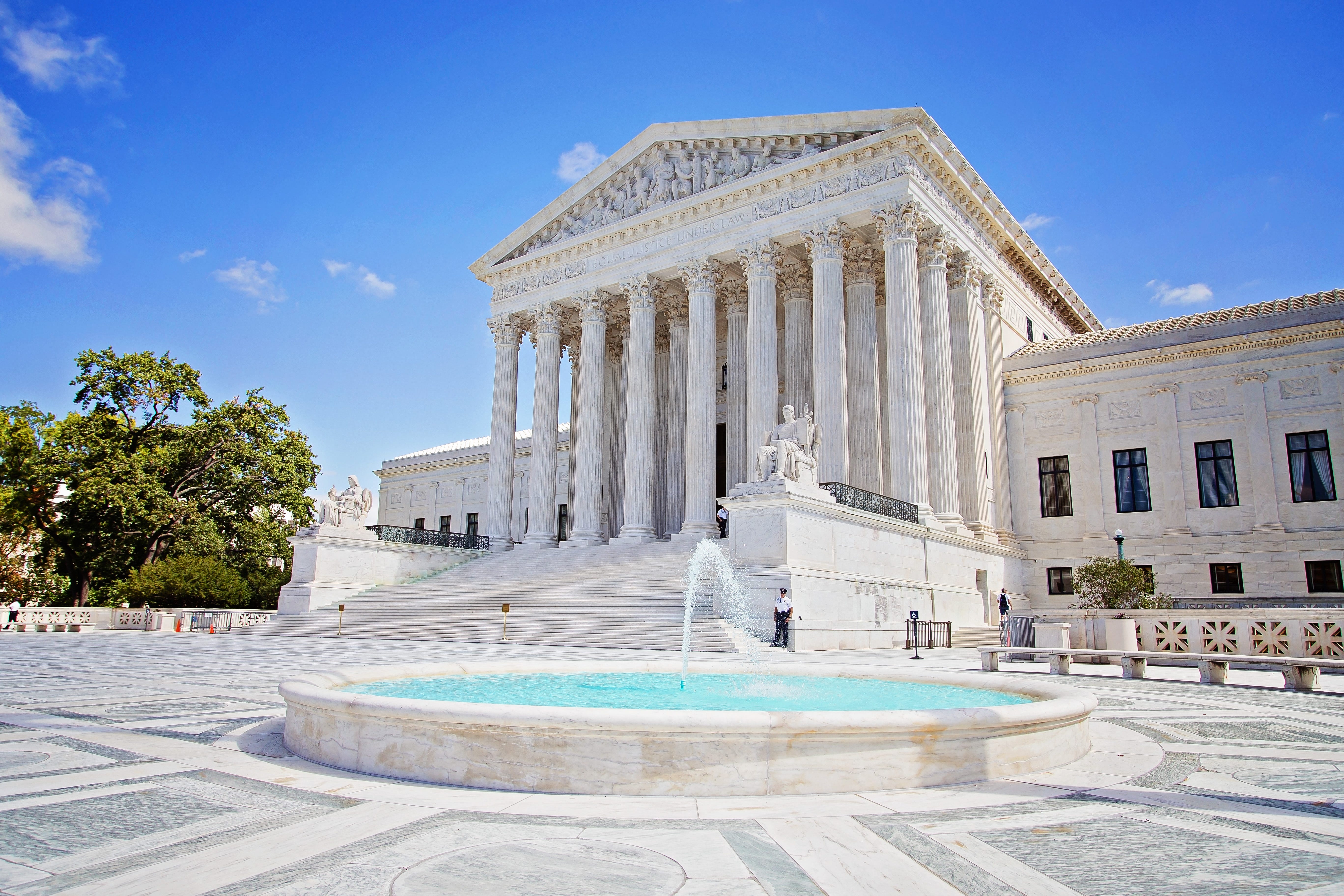
Still, as might be expected for a president who has made election security a signature issue, President Trump has made several attempts to use executive power to put his stamp on American elections, including an order that is currently pending before the Supreme Court. Here’s where these efforts stand:
Trump’s first executive order
The president’s opening salvo in this fight was his March 2025 executive order, “Preserving and Protecting the Integrity of American Elections.” Most notably, that order:
Directed the Election Assistance Commission (EAC) to change the federal voter registration form to include a documentary proof-of-citizenship requirement.
Directed the Attorney General to take “all necessary action” against states that count mail-in ballots sent on or before Election Day but received afterward.
Large parts of the order were almost immediately blocked by several federal judges, including ones in Washington, D.C. and Boston. Both judges have since converted their temporary blocks on the order into rulings permanently barring Trump’s directive from taking effect.
“Because our Constitution assigns responsibility for election regulation to the States and to Congress, this Court holds that the President lacks the authority to direct such changes,” Judge Colleen Kollar-Kotelly ruled in D.C.
The rulings have been appealed to the federal circuit courts, although neither case seems to be proceeding particularly quickly: oral arguments in the Boston case aren’t set to take place on the appellate level until December 9, after the 2026 midterms have already passed, and even those arguments are only over Judge Denise Casper’s temporarily ruling against the EO, not her permanent ruling issued more recently.
Trump’s second executive order
With his first EO put on hold, Trump tried again in March of this year with another one, titled “Ensuring Citizenship Verification and Integrity in Federal Elections.”
This order directed the Secretary of Homeland Security (in coordination with the heads of U.S. Citizenship and Immigration Services and the Social Security Administration) to make a list of people in each state “confirmed to be United States citizens who will be above the age of 18 at the time of an upcoming Federal election and who maintain a residence in the subject State.”
The U.S. Postal Service was then directed to put regulations in place ensuring that mail-in ballots would only be sent to people who are on the federal list of eligible voters.
In June, Judge Indira Talwani, a federal district judge in Boston, blocked the order from being enforced in 23 Democratic-led states that had sued over the directive. Then, last week, Judge Talwani expanded her block nationally, in response to lawsuits by national organizations including the League of Women Voters and the NAACP.
Separately, Judge Carl Nichols in Washington, D.C. rejected a different challenge to the order in May. A three-judge panel of the D.C. Circuit Court of Appeals upheld Nichols’ ruling late last month.
The Trump administration has asked the Supreme Court to undo Judge Talwani’s initial, state-specific ruling on an emergency basis. Then, last week, the administration reiterated its request in light of Judge Talwani’s second ruling, which the Justice Department said “confirms the urgent need for this Court to grant the stay of the [initial order] and to explain its rationale for doing so.”
The Supreme Court is expected to rule on Trump’s emergency request any day now, the first time the justices will have weighed in on the president’s attempts to alter election rules.
The dueling rulings by Judges Talwani and Nichols offer insight into how the justices could rule. If they block the order, they will likely follow the path laid out by Judge Talwani, who ruled that Trump’s efforts violated separation of powers, exceeding the (slim) authority over elections given to him by the Constitution. Notably, Judge Nichols didn’t push back on that logic — nor did Trump’s lawyers when they asked the Supreme Court to review the issue.
Instead of dwelling on whether or not the EO was legal, Judge Nichols (and the Justice Department in its emergency request) said that it was too early to issue a ruling. Although Trump has ordered the Postal Service to impose regulations on who could receive mail-in ballots, the Postal Service has not yet done so.
Therefore, Judge Nichols wrote, the organizations bringing lawsuits had not yet suffered an injury that would qualify them to sue. “The Court recognizes that the Postal Service may ultimately issue a final rule that directly affects Plaintiffs or their members, or that the Government may develop State Citizenship Lists that omit specific individuals due to particularized flaws,” Judge Nichols ruled. “Plaintiffs may, of course, renew their motions if and when those future actions occur. Until then, however, Plaintiffs cannot show that preliminary injunctive relief is warranted.”
These are the same arguments the Trump administration made to the Supreme Court, essentially: You don’t know exactly how the Postal Service is going to write their regulations. Come back to us once the regulations are done and we can talk.
Because the Trump administration is not yet making an argument on the merits of the EO, it effectively ensures that even a temporary win for the president at the Supreme Court will not automatically translate into a broader victory. If the court sides with Trump, it will be doing so on procedural grounds, ruling that it’s too early to make a decision on the EO.
Then the Postal Service would have an opportunity to write its regulations, and the litigants would have an opportunity to sue again, potentially setting up another Supreme Court clash in the final weeks of the campaign.
Seeking voter data
Finally, the other big Trump election push worth noting is his Justice Department’s attempt to obtain voter rolls from the states, as part of the efforts laid out in the two EOs to ensure non-citizens are not being given the opportunity to vote.
So far, 30 states have declined to comply with the DOJ’s requests, sparking lawsuits from the Trump administration.
Of these 30 cases, federal district judges have ruled in 23 of them. The Trump administration has lost all 23 times, including its most recent loss yesterday in Minnesota. One appeals court, the Sixth Circuit, has ruled, also rejecting the Trump administration’s request.
Attorney General Todd Blanche opened the door Sunday to appealing the case to the Supreme Court. “Absolutely it’s a possibility,” Blanche said on NBC’s “Meet the Press.” Until then, there is little positive news for Trump in this particular uphill battle.
Should USPS start to implement the EO, it is hard to imagine that it wouldn't be immediately blocked by the courts. I think that the bigger threat is that Trump federalizes the National Guard under some emergency pretense to intimidate voters as they go to vote. I can imagine CBP and ICE out in force in minority districts scaring citizens from going to the polling places or creating blockages that limit their access. I find that a much more credible threat than a cockamamie plan to restrict mail-in ballots.
“…leading to occasional efforts from each side to nationalize elections…”
Is this a case of “both-siderism” so as to not upset one side (R’s), or have the dems really tried some of these same shenanigans? If so, I’d love a history lesson.