


The U.S. Constitution contains plenty of important and innovative features: Federalism. Checks and balances. Separation of powers.
But, in my opinion, the most beautiful and essential part of the document comes towards the end: Article V, the section that outlines the process for the Constitution to be amended.
The Founders were humble enough to know that their work wasn’t perfect, and they embedded within the Constitution the possibility for it to be changed and transformed.
This has been the key ingredient that has allowed the document to persevere for 200+ years, by being flexible enough to mature along with the country and accommodate enormous changes: in who gets to vote (15th, 19th, 26th); in how the government is funded (16th); in how long its leaders are able to hold power (22nd).
The Constitution’s authors wanted this sort of change to be possible — but they also didn’t want it to be easy, which is why they set a high bar for amendments, which must be approved by two-thirds of the House, two-thirds of the Senate, and three-fourths of the state legislatures.
It has been 34 long years since any proposal has overcome that threshold. We are currently living through a constitutional amendment drought, which is unfortunate, because we are also living through a time of incredible frustration towards our system of government.
And yet almost nobody is trying to address this frustration through the path the Founders intended — constitutional amendment — because everybody is convinced it would no longer be possible, even though no one has really tried.
In the latest video for my YouTube channel, I speak to someone who knows a thing or two about amending the Constitution, because he’s singlehandedly responsible for the most recent amendment being ratified.
Gregory Watson has one of my favorite stories in American political history. He was a student at the University of Texas when he stumbled upon a quirky path to change the Constitution, and waged a 10-year campaign that ended with ratification of the 27th Amendment, which prevents members of Congress from raising their own salaries.
I talked to Gregory about how he was able to change the Constitution as a college student and his thoughts on what it would take to amend the Constitution now. I also give my perspective: while Gregory is fairly pessimistic, I think there could be an avenue for an amendment to generate bipartisan support in the next few years — if only someone tries. I even have a specific one in mind. I hope you’ll give it a watch:
While you’re at it, also don’t forget to subscribe to Wake Up To Politics on YouTube. It’ll help our videos find more viewers, and it will make sure you see them as soon as they’re posted:
This video is actually coming at a perfect time because the House is set this week to do exactly what I recommended: vote on a constitutional amendment!
The chamber will consider H.J.Res.1, which would constitutionally set the size of the Supreme Court at nine justices (its current level).
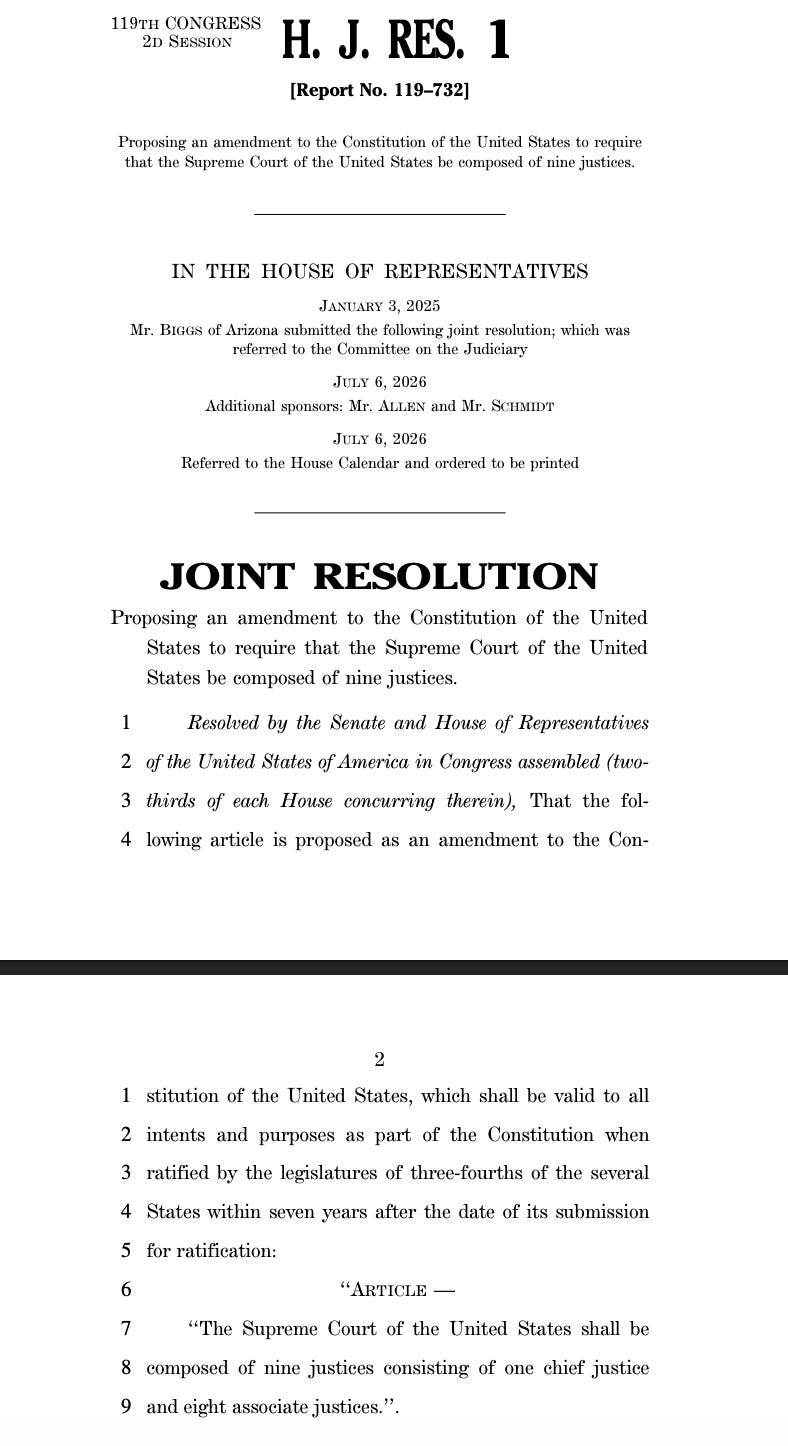
I think it’s encouraging to see House leadership actually scheduling a vote on an amendment proposal, and I will be curious to see the vote breakdown. But I still wouldn’t say that this really fits the bill of what I was talking about.
For a constitutional amendment to actually be ratified, it would require nationwide attention and energy being put towards an issue. It would take more than just the House quietly slipping a vote on an amendment onto its schedule, without much notice or debate.
Gregory Watson’s story provides a great example of what it actually takes to amend the Constitution. I think you’ll enjoy listening to him as much as I enjoyed talking with him:
Great story of persistence! I’m happy that my home state, Colorado, was one of the first to ratify.
Very Good "real news" video! Keep this video, Gregory and this topic present and moving. (I hate to say 'viral', but it should be burning up the airwaves [or electro-magnetic frequencies].