


Quick flag: Those of us in the media spend a lot of time talking about problems. Here at Wake Up To Politics, I also like to shine a light on the solutions.
Remember the infant formula shortage from back in 2022? Once the issue subsided, the media attention largely fell away — but, behind the scenes, legislators have been working on a bipartisan bill that would prevent a similar crisis from happening again. The Protect Infant Formula from Contamination Act recently passed the Senate unanimously.
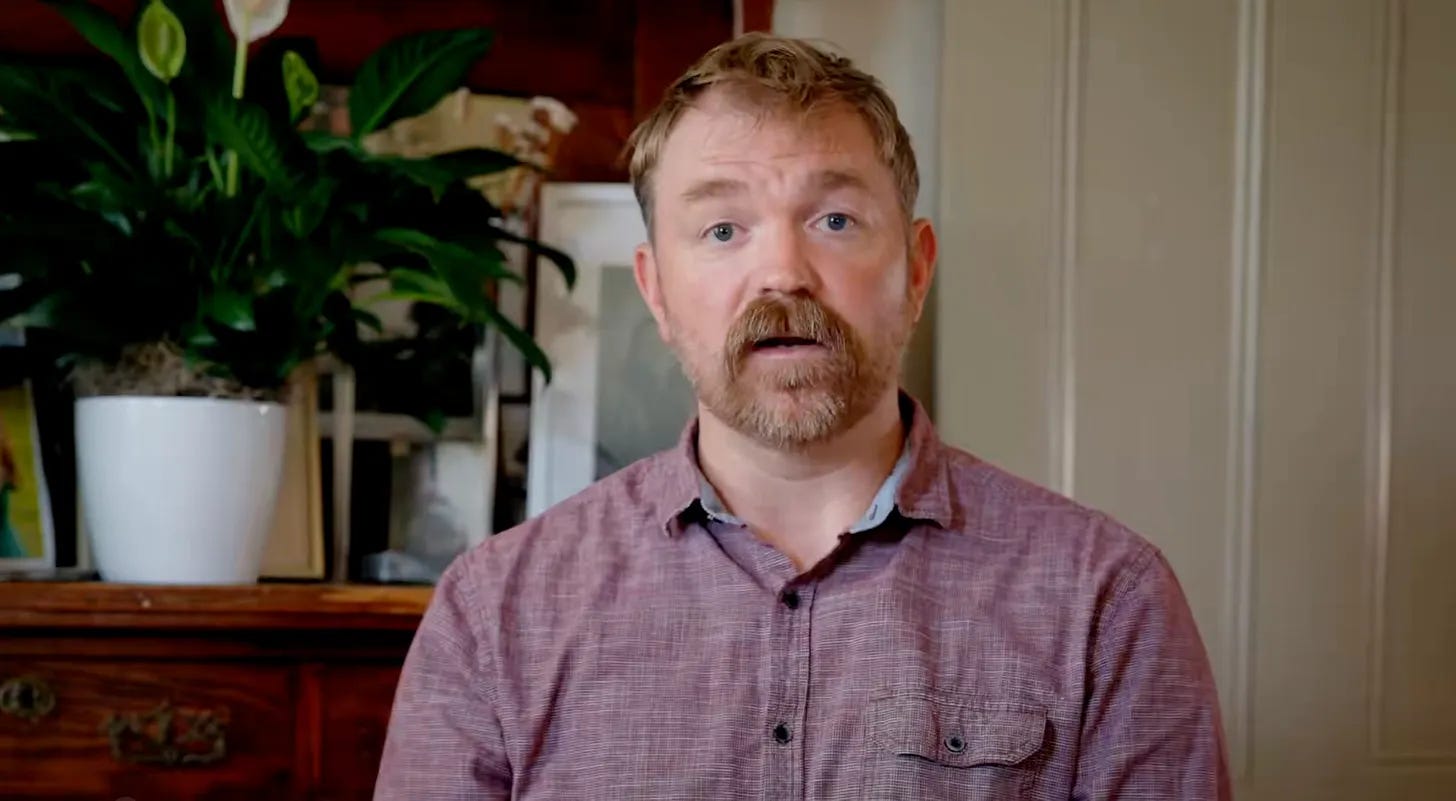
In the first video for my new YouTube channel, I speak with Sen. Gary Peters (D-MI), the author of the bill, about what it’s like working across party lines to actually get something like this done in Congress, even when it takes years. Who do you talk to? How do you get them on board? We also discuss the future of bipartisanship in Congress, and whether or not responsible governing efforts like this one are soon to be a thing of the past.
Check out the video here:
And now, let’s take a trip to Maine…
It appears that the Graham Platner subplot in American politics is almost over.
Platner rocketed onto the scene nearly a year ago as an unknown, outspoken, progressive oysterman who quickly caught fire and — against all odds — ended up driving Gov. Janet Mills, a fixture of Maine politics, out of the state’s Senate Democratic primary race.
Democrats stood by him through the Reddit posts, and the tattoo of a Nazi symbol, and the sexting with women who were not his wife, and after an ex-girlfriend accused him of being physically threatening toward her, still believing that the scandal-plagued upstart was their best hope at fulfilling a long-held dream: unseating Republican Sen. Susan Collins.
They don’t believe that now. In a Politico report on Monday, a woman who previously dated Platner accused him of entering her home uninvited in 2021 and raping her. The Washington Post then reported Tuesday that the first ex-girlfriend said he would repeatedly remove condoms without her consent when they were having sex.
In response, the Democratic National Committee and the Maine Democratic Party called on Platner to drop out. So did Senate Minority Leader Chuck Schumer (D-NY) and Sen. Bernie Sanders (I-VT), his foremost backer. The Senate Democrats’ campaign arm has pulled its spending from the state, and said they will not invest in the race unless Platner steps away.
Under Maine law, if Platner withdraws by “5 p.m. of the 2nd Monday in July preceding the general election” — this coming Monday — the state party can replace him with a new nominee. Virtually isolated within the party, Platner is apparently grasping for one last bit of leverage, attempting to negotiate over who his replacement will be and threatening to stay in the race if an “establishment” candidate is anointed. Many in Platner’s camp are promoting former Maine Senate president Troy Jackson, who ran unsuccessfully for the Democratic gubernatorial nomination this year with Sanders’ support.
The executive director of the state party said in a statement last night that Platner’s advisers have “repeatedly reached out to us in an attempt to put their thumb on the scale” in picking a replacement nominee. “We’ve repeatedly reiterated to Graham Platner’s team that they have no role in determining our next Democratic nominee for the U.S. Senate, nor in determining what this process looks like,” the party official added.
According to the New York Times, the state party (which would have until July 27 to name a replacement) is considering holding a pop-up convention or statewide caucus in late July to select a new candidate if Platner does withdraw. Jackson (who came in third place in the gubernatorial primary) has already filed paperwork to seek the nod; two of his former rivals, ex-public health official Nirav Shah (who came in second in the gubernatorial primary) and Maine Secretary of State Shenna Bellows (who came in fourth), are also seen as possible contenders. Bellows previously ran against Collins in 2014, losing by 36 percentage points.
Some Democrats are reaching even further afield: one firm polled the popularity of Patrick Dempsey, the Maine native who played Derek “McDreamy” Shepard on “Grey’s Anatomy.” (His net favorability rating was +43%, compared to Platner’s -7%, Shah’s +10%, Jackson’s +6%, and Bellows’ +1%.)
How does it typically go for political parties when they pull off this sort of late-in-the-game candidate swap?
Obviously, we all saw a party try it and come up short in 2024, when Democrats subbed in Kamala Harris for Joe Biden. Another modern example is the 2004 Illinois Senate race, when businessman Jack Ryan won the Republican nomination and dropped out four days later, after his divorce records were unsealed and showed that he had taken his ex-wife to sex clubs and tried to pressure her to perform sexual acts while there. The state GOP replaced Ryan with right-wing commentator Alan Keyes, who went on to lose to a young state senator with a funny name.
That’s right: Barack Obama first arrived in Washington as a result of a failed candidate swap.
On the other side of the ledger, there’s the 2002 Senate election in New Jersey, when incumbent Democratic Sen. Robert Torricelli withdrew in late September due to a campaign finance scandal. Democrats replaced him on ballot with former Sen. Frank Lautenberg, who won the race after about a month-long campaign.
Lautenberg died in 2013, and neither Harris nor Obama were likely to speak to me. But I found another candidate swap veteran who would.
“World’s greatest guy speaking,” Arne Carlson said when I reached him by phone Tuesday. Carlson is 91 years old and lives in Hopkins, Minnesota. More than 30 years ago, he engaged in a successful last-minute political rescue mission — and he thinks his experience is an encouraging sign for Maine Democrats.
“The prevailing opinion is that when a candidate comes in at this time, that candidate is at a disadvantage,” Carlson acknowledged. He thinks that conventional wisdom is wrong.
Back in 1990, Carlson was serving as the state auditor of Minnesota when he decided to throw his hat in the ring for the state’s governorship. A moderate Republican, he entered the GOP primary, but an outsider businessman named Jon Grunseth outflanked Carlson from the right and “beat the daylights” out of him (his words). “This was the Christian right taking over the Republican Party, that’s really what it was,” Carlson told me, recounting how Grunseth leveraged support from “pro-life, pro-gun” voters to defeat him.
About a month before the election, the Minnesota Star Tribune reported that Grunseth had skinny-dipped with his daughter and other teenage girls at a 1981 pool party at his home. Two other girls who attended the party alleged that he encouraged them to swim naked as well; when they refused, they said, he tried to take their swimsuits off and touched one of them inappropriately.
Like Platner, Grunseth denied the allegations and insisted that they were politically motivated. Grunseth initially rebuffed the mounting calls for him to drop out, which led Carlson to launch a write-in campaign (which “realistically had virtually no chance,” he admitted yesterday, if only because voters were unlikely to spell his first name “Arne” correctly, without an “i”).
In many countries, political parties exert tight control over who their candidates for office are. In America, because of our more democratic primary system, parties play a secondary role: voters pick a nominee, and the party can generally only make a change if that nominee then decides to call it quits. Even though the nominee is running on the party’s ballot line, the party has already rented it out to the candidate, and they can’t get it back unless the nominee gives it up voluntarily.
This gives the democratically selected nominee all the leverage in these situations, for better or for worse, and allows a controversial candidate to effectively hold their party hostage. That’s arguably what Platner’s doing now. Grunseth did the same thing. At one point, he even called a press conference to announce his withdrawal from the race, but his supporters started protesting (“tossing chairs on the floor against the wall, saying, you have got to stay in this race, and if you don’t think you can win, you owe us a good fight,” as one adviser recalled).
Like something out of a movie, Grunseth went to the podium and tore his withdrawal speech in two. “I came here tonight to withdraw from this race,” he said. “But there has been just an incredible outpouring of love… We are going to press forward no matter [what].” Call that the Maine Democrats’ nightmare scenario.
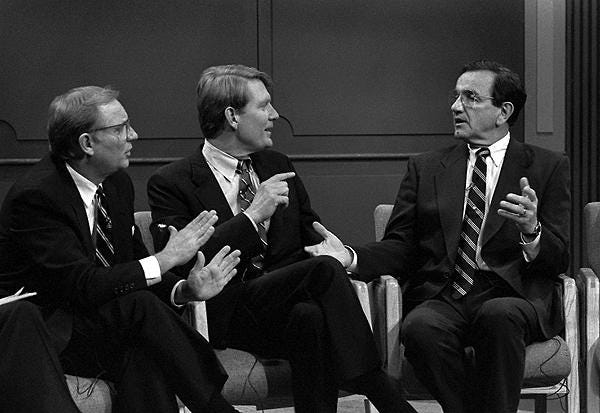
On October 28, the Star Tribune dropped another bombshell, reporting that Grunseth — who had promised that nothing more was out there, and that his “wild years” ended when he married his wife — had, in fact, engaged in a years-long extramarital affair with a woman named Tamara Taylor.
“The Star Tribune broke the story about his so-called mistress, and she was absolutely gorgeous,” Carlson recounted. “If there are two and a half million men in Minnesota, and they were asked by the Star Tribune, ‘Did you sleep with her?’, every one of them would have said, ‘You bet,’ and there was only one dissenter: Jon Grunseth. I mean, Tamara Taylor was absolutely one of the most lovely creatures ever put on this planet.”
The image Grunseth had tried to build in the public eye was punctured. “It’s a little hard to run on a Christian values platform and then have all this tawdry stuff going on,” Carlson pointed out. This time, Grunseth agreed to drop out.
At this point, there was only one week left in the race. Grunseth, like Platner, wanted to have a say in who his replacement would be. At the would-be withdrawal press conference, he had been planning to announce who he wanted as the next nominee, a state legislator who was in Grunseth’s “exact same mold” ideologically, as Carlson put it. Grunseth did not want the much more moderate Carlson to take his place.
But it was too late. He had waited too long, and lost too many allies, to wield any influence. The state party determined that there simply wasn’t enough time to pick a new candidate from scratch and gave the nomination to Carlson, as the primary runner-up, by default.
After all the mud-slinging that had taken place between Grunseth and the Democratic candidate, incumbent Gov. Rudy Perpich, Carlson said that voters were relieved to have a fresh face.
“I was in the auditor’s office, and hundreds of people just gathered under the windows, [chanting] ‘We want Arne, we want Arne,’” he recalled. “It was very seductive.”
“It was an unbelievable upheaval,” Carlson added. “I remember my first flight was down to Mankato, and I swear to God it was a scene right out of Charles Lindbergh landing in Paris, of people cheering. I kept saying, ‘I’d like to get this campaign back to the issues,’ and they kept cheering and cheering and cheering, and many of these stops I was never able to give a talk because they were cheering so much.”
“There was a tremendous outpouring of support. I would go downtown and people would stuff money in my pockets. That’s no exaggeration. We raised more money in the first few days of this new campaign than we raised in the prior primary.”
The short campaign, and the enthusiasm unleashed by finally being rid of Grunseth, worked. Carlson beat Perpich in November and went on to serve two terms as Minnesota’s governor. “I was a surfer who caught a beautiful wave,” he told me.
Carlson predicted that whoever replaces Platner will benefit from the same feeling of relief. “All that has taken place so far is like two battleships lobbing shells at each other, and after a while, the public is tired of it… A nice new fresh face comes in, the public invariably welcomes it.”
Indeed, it’s possible that the best-case scenario for Maine Democrats is having a nominee who is not Graham Platner and not Janet Mills — and since they were the only two viable candidates for the nomination, the only possible way for that to happen was for Platner to drop out now, after the primary.
When the New York Times recently polled six Senate battlegrounds, and asked voters which candidate they planned to vote for and which party they would prefer to control the Senate generally, they found all the Democratic candidates running ahead of where they “should” be … except Platner, whose vote share was 10 points behind the percentage of Maine voters who wanted Democrats to win the Senate.
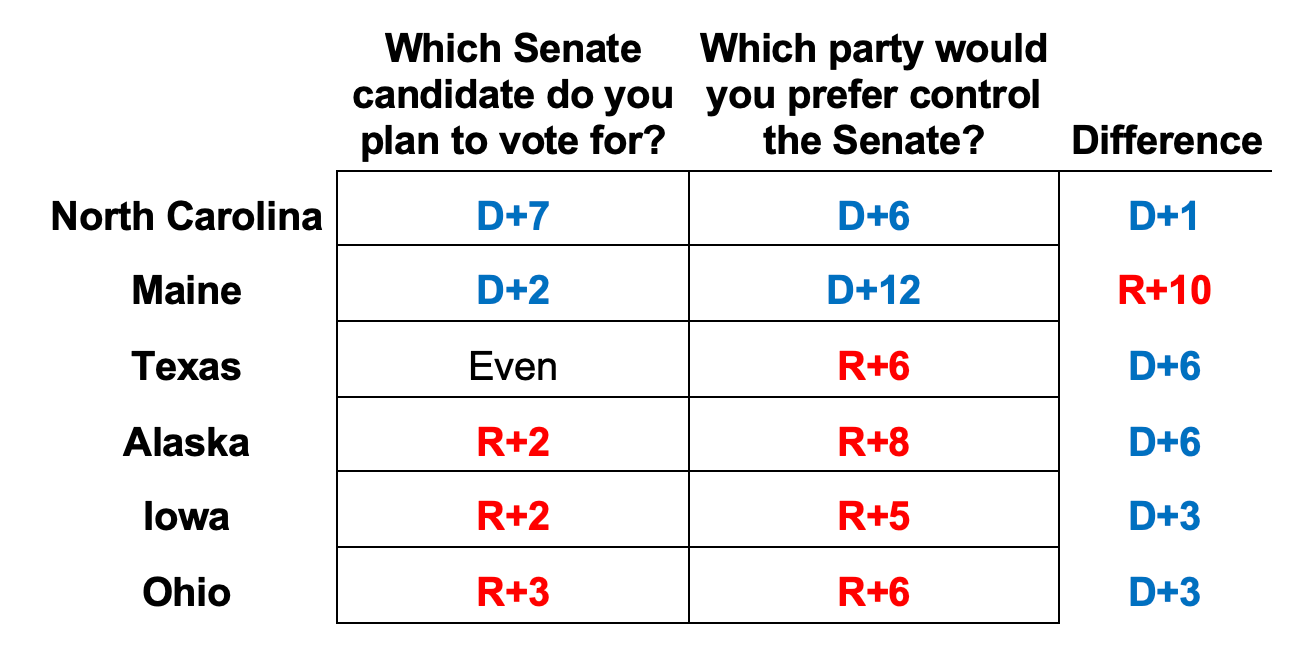
Part of this was Collins’ unique strength, built up over five terms. But part of it was Platner’s unique vulnerabilities: his favorability rating in the Times poll was lower than Collins’.
If Platner drops out, the new nominee Democrats put forward will still face a tough road — but, at least, that candidate will likely be more popular than either Platner or Mills, their previous two options, and possibly more popular than Collins as well.
Carlson, the former Minnesota governor, acknowledged that his situation didn’t perfectly parallel the one in Maine. His timeline was much shorter, which he believed worked to his advantage (less time to get down in the muck with his opponent and lose the sheen of riding above it). He says that he didn’t have to worry as much about losing Grunseth’s supporters as the next Democrat will likely have to worry about losing Platner’s. While Grunseth and Carlson drew from different voter bases, a Democrat likely won’t beat Collins without winning the bulk of Platner voters. To that end, because Carlson and Grunseth were so clearly opposed to each other, he didn’t have to worry about the stink of Grunseth’s scandal rubbing off on him, which a Democrat might have to if they are seen as a close Platner ally.
Still, he said, the mission of any last-minute candidate remains the same.
“[There is a] wave of enthusiasm that the public is going to give this new entry, and then the question is, can you ride that wave successfully?” Carlson said. “They’re going to give this new person the benefit of the doubt, and that person then has to live up to that expectation. If that person comes out and smells like a politician? Goodbye.”
Kamala Harris, he noted, benefitted from the same wave of enthusiasm in her early days as a replacement nominee, but ultimately proved unable to ride it once the initial excitement wore off.
It’s unknown whether Platner will remain in the shadows, making life difficult for a replacement nominee (as Biden did). For his part, after dropping out, Grunseth would later sue a fellow Minnesota Republican, alleging that they promised to pay down his campaign debts if he exited the race, and the Marriott hotel chain, alleging that a hotel employee gave records to the Star Tribune revealing his stay with Tamara Taylor. He lost both lawsuits, and later moved to Australia, where he started a cherry farm. He now lives in Scotland.
Carlson, meanwhile, has since been effectively expelled from the Minnesota Republican Party, which has continued moving to the right. He now considers himself an Independent, he told me; he endorsed Hillary Clinton, Biden, and Harris in the last three presidential elections.
Reflecting on his week as a political pinch-hitter, Carlson acknowledged that it’s a “very difficult assignment,” though he believes it can be easier than slogging through the pitfalls of a long campaign. When I asked if he believes he would have won the governorship in 1990 if he had been the nominee from the start, he admitted that he wasn’t sure.
“I truthfully can’t answer that question,” Carlson said. “I think either way it would have been close.”
What an interview, and what a man Arne Carlson is. Still a registered Republican but he's sure been backing a whole lot of Democrats in the last 20 or so years.
Great piece, Gabe. I really enjoyed this one.