


Happy Tuesday. We’ve officially entered the last month of the year — that odd, sleepy period between Thanksgiving and Christmas — but in the Trump era, that’s no reprieve from the constant gusher of news. So, this morning, instead of one big story, I’m going to break down a bunch of things I’m tracking right now, to make sure we’re all caught up and on the same page.
Buckle up: we have a lot to talk about.
Boat strikes. As President Trump convenes his Cabinet for their ninth meeting of the year at 11:30 a.m. ET today, all eyes will be on Defense Secretary Pete Hegseth, who is being investigated by both chambers of Congress over a pair of airstrikes against an alleged drug boat on September 2. According to the Washington Post, after an initial strike left two people “clinging to the smoldering wreck,” the U.S. launched a second strike to kill the survivors — a potential violation of U.S. and international law preventing attacks against those unable to defend themselves.
The Post reported that the second strike was carried out in order to comply with a spoken directive by Hegseth, given before the first strike, to “kill everybody” on board.
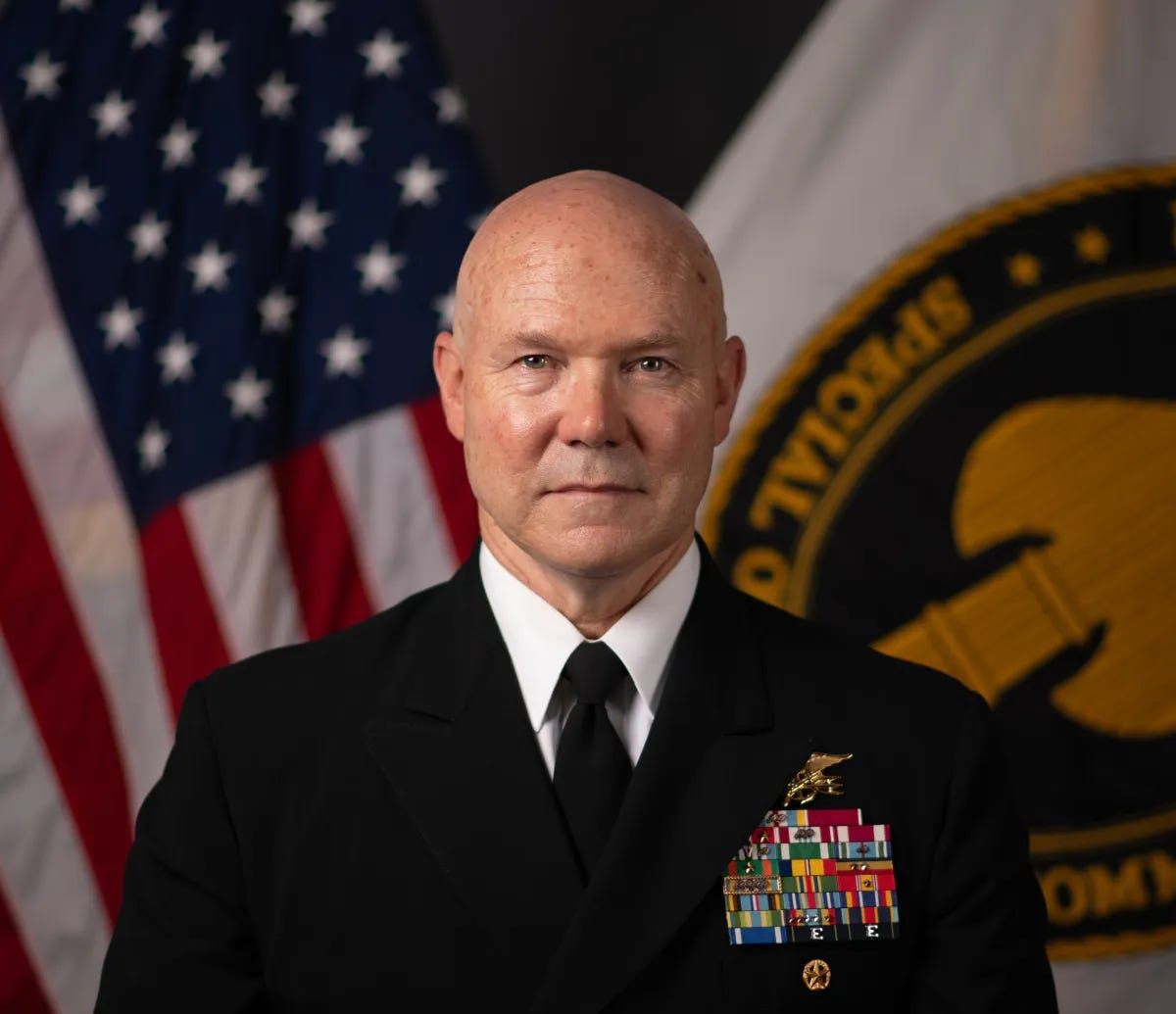
White House press secretary Karoline Leavitt denied on Monday that Hegseth gave such a directive, and said that Adm. Frank “Mitch” Bradley, the commander of U.S. Special Operations Command, authorized the second strike and “worked well within his authority and the law” to do so. “I stand by him and the combat decisions he has made — on the September 2 mission and all others since,” Hegseth echoed on X.
The Post has since reported that officials in Congress and the Pentagon are “increasingly concerned” that Hegseth is attempting to distance himself from the second strike and use Bradley as a scapegoat. Senate Armed Services Committee chairman Roger Wicker (R-MS), whose panel is examining the incident, said Monday that he had already spoken with Hegseth and planned to speak with Bradley as well.
Tennessee election. The last major election of 2025 will be held today in Tennessee’s 7th congressional district, where voters will pick a replacement for former Rep. Mark Green (R-TN), who resigned in July to join the private sector.
In 2024, Tennessee’s 7th voted 60%-38% for Trump — a 22-point margin — which means it isn’t the sort of district that would normally attract national notice. But funny things can happen in special elections, when money and attention that would normally be spread across the country is focused on a single race, and when turnout is minimal, creating a very different electorate than would cast ballots in the same district in a presidential or even midterm year.
And funny things seem to be happening here: an Emerson College poll released last week found Republican Matt Van Epps ahead of Democrat Aftyn Behn by only two percentage points, raising Democratic hopes of a come-from-behind victory in deep-red territory.
It is typical for parties out of the White House to overperform in special elections, but overperformances to the degree that Democrats would need to win tonight are historically uncommon: per Decision Desk HQ, only twice in the last 20 years has a party flipped a House district in a special election that the other party’s presidential candidate won by 20+ points in the preceding election (excluding races where one of the parties fielded multiple candidates, affecting the results).
However, even a slim GOP victory would likely bolster Democratic optimism — and worsen Republican fears — about the 2026 midterms. As the Cook Political Report’s Amy Walter noted, none of the GOP ads in the race have mentioned Trump, a sign that Republicans are entering 2026 in a “purely defensive posture.” Even in a district Trump won by 22 points, the president is unpopular enough that it is not clear it helps to be associated with him. Trump, whose domestic travel has slowed considerably, did not hold any rallies with Van Epps (although he did speak at one event via speakerphone).
U.S. attorneys. A federal appeals court ruled yesterday that Alina Habba, President Trump’s former personal attorney, has been serving unlawfully as the U.S. attorney in New Jersey.
By law, presidents can appoint interim U.S. attorneys to 120-day terms, after which it is up to a local panel of judges to either keep the top prosecutor in place or appoint a new one. New Jersey judges declined to retain Habba when her 120 days expired, choosing a career prosecutor to fill the role. However, Attorney General Pam Bondi decided to fire the career prosecutor and return Habba to the role by appointing her to the second-highest-ranking position in the office, making her the acting U.S. attorney by default.
A three-judge appeals court panel — made up of two George W. Bush appointees and a Barack Obama appointee — rejected that maneuver Monday. This is only the latest stumble Trump has experienced in his attempts to indefinitely install loyalists in U.S. attorney’s offices without Senate confirmation; last week, a federal district judge ruled that another former Trump lawyer, Lindsay Halligan, had been illegally appointed as U.S. attorney for the eastern district of Virginia. (The judge also ruled that criminal cases brought by Halligan, including against former FBI Director James Comey and New York Attorney General Letitia James, must now be dismissed. Per Politico, the Justice Department is deciding whether to seek new indictments against them.)
The Habba case could soon be appealed to the Supreme Court, adding to the long list of Trump-related questions before the justices.
In other news…
Juan Orlando Hernández, the former president of Honduras, was released from U.S. prison yesterday after being pardoned by President Trump. Hernández was sentenced to 45 years in prison in 2024, after a jury found him guilty of taking bribes from drug traffickers to allow them to move about 400 tons of cocaine into the U.S. Trump has, without evidence, called the prosecution a “Biden administration set-up.”
Trump is set to announce today that tech billionaires Michael and Susan Dell have pledged $6.25 billion to seed 25 million new “Trump accounts.” Dell will give $250 each to accounts for children who missed the eligibility cutoff for the government to place $1,000 in their accounts under the One Big Beautiful Bill.
White House special envoy Steve Witkoff and presidential son-in-law Jared Kushner are set to meet with Russian President Vladimir Putin today as they continue their search for a Ukraine peace deal.
With finalists to be the next Federal Reserve chair set to sit down for interviews with the White House this week, longtime Trump adviser Kevin Hassett appears to be in pole position to claim the job.
Remember the agreement to hold a vote on Obamacare subsidies in exchange for ending the shutdown? That vote is set to take place next week, and no bipartisan deal to extend the tax credits seems to be coming together.
Florida is the latest state to launch a mid-decade redistricting effort after an announcement by Gov. Ron DeSantis (R-FL).
Costco is suing the Trump administration over tariffs, arguing that the import taxes are unlawful and seeking a “full refund.”
The Trump family’s never needed a pet in the White House — they’ve always had more than enough scapegoats to keep track of
Hi Gabe, great post today, thank you! You mentioned that Steve Witkoff and Jared Kushner were meeting with Putin today. Have you seen yesterday's Popular Information Substack post, "Top Trump negotiator (Witkoff)retains partnership with Ukraine-sanctioned billionaire". If this is real, it is certainly newsworthy. Most news services are mentioning Witkoff as as the main negotiator, but nothing of his Russian financial relationships. Thanks again.