


The last time a Democrat won statewide office in Texas, it was 1994.
Before the iPhone.
Before Google.
“Friends” had just debuted and the O.J. Simpson trial was about to begin.
Barack Obama was a law professor at the University of Chicago. Donald Trump hadn’t even started hosting “The Apprentice.”
In a sign of shifting tides, the marquee races in the Lone Star State went red that year. Kay Bailey Hutchison was re-elected to the Senate, and a young man named George W. Bush defeated incumbent Democrat Ann Richards, becoming only the state’s second Republican governor in the 120 years since Reconstruction.
But other members of Richards’ ticket still held on, including the state’s lieutenant governor and attorney general. They were the last Democrats to taste a major victory in Texas; no other state has gone so long without electing at least one Democrat statewide.1
It hasn’t been for lack of trying.
There was 2014 gubernatorial candidate Wendy Davis, who launched to national stardom with her 13-hour abortion filibuster in pink tennis shoes. Then there was Beto O’Rourke in 2018, and Colin Allred in 2024, both Senate candidates who made Democrats swoon.
Nope. Nope. And nope.

What do you know: it’s a year that ends in “2,” “4,” “6,” or “8,” which means Democrats are trying once again to hunt down their white whale. And after last night’s primary elections, the first of the 2026 midterms, the party once again feels like it’s their best chance in Texas yet.
Republican strategist Kristen Soltis Anderson put it well on X. For Democrats to win a Senate race in Texas, three stars would all have to align:
An exceptionally good political environment,
A good Democrat,
And a bad Republican.
Let’s take them in order.
A rosy political environment for Democrats? Check. President Trump’s approval rating is stuck in the low 40s. Dissatisfaction with the economy is soaring. And the U.S. has potentially found itself in yet another drawn-out war in the Middle East.
In Texas specifically, per Emerson College, Trump’s approval rating is at 48% — eight points behind his 56% share of the vote there in 2024. It is likely to be a difficult year for Republicans nationwide.
A strong Democratic candidate? National Democrats think they’ve checked this box as well. Until last night, the Texas Democratic Party was engaged in a bitter primary battle for this year’s Senate seat, between Rep. Jasmine Crockett and state Rep. James Talarico.
Unlike in most Democratic primaries, the divide wasn’t really ideological: Crockett and Talarico aren’t that far apart on the issues, and it’s not really clear that either one is more progressive or moderate than the other.
Instead, theirs was a stylistic difference. Crockett is the consummate fighter, known for her viral takedowns of Republicans, like when she said that Marjorie Taylor Greene had a “bleach-blonde bad-built butch-body” at a House committee hearing (and then quickly moved to trademark the phrase and started selling “B6” shirts as part of a “Clapback Collection”).
Talarico is the preacher trying to use his faith and a more conciliatory message to reach across party lines (The New York Times: “Can James Talarico Reclaim Christianity for the Left?”; The New Yorker: “James Talarico Puts His Faith in Texas Voters”; Politico: “He’s Deeply Religious and a Democrat. He Might Be the Next Big Thing in Texas Politics”; you get the point).
Last night, Democratic primary voters chose Talarico’s approach: he won the Democratic Senate nomination with 53% of the vote to Crockett’s 46%.
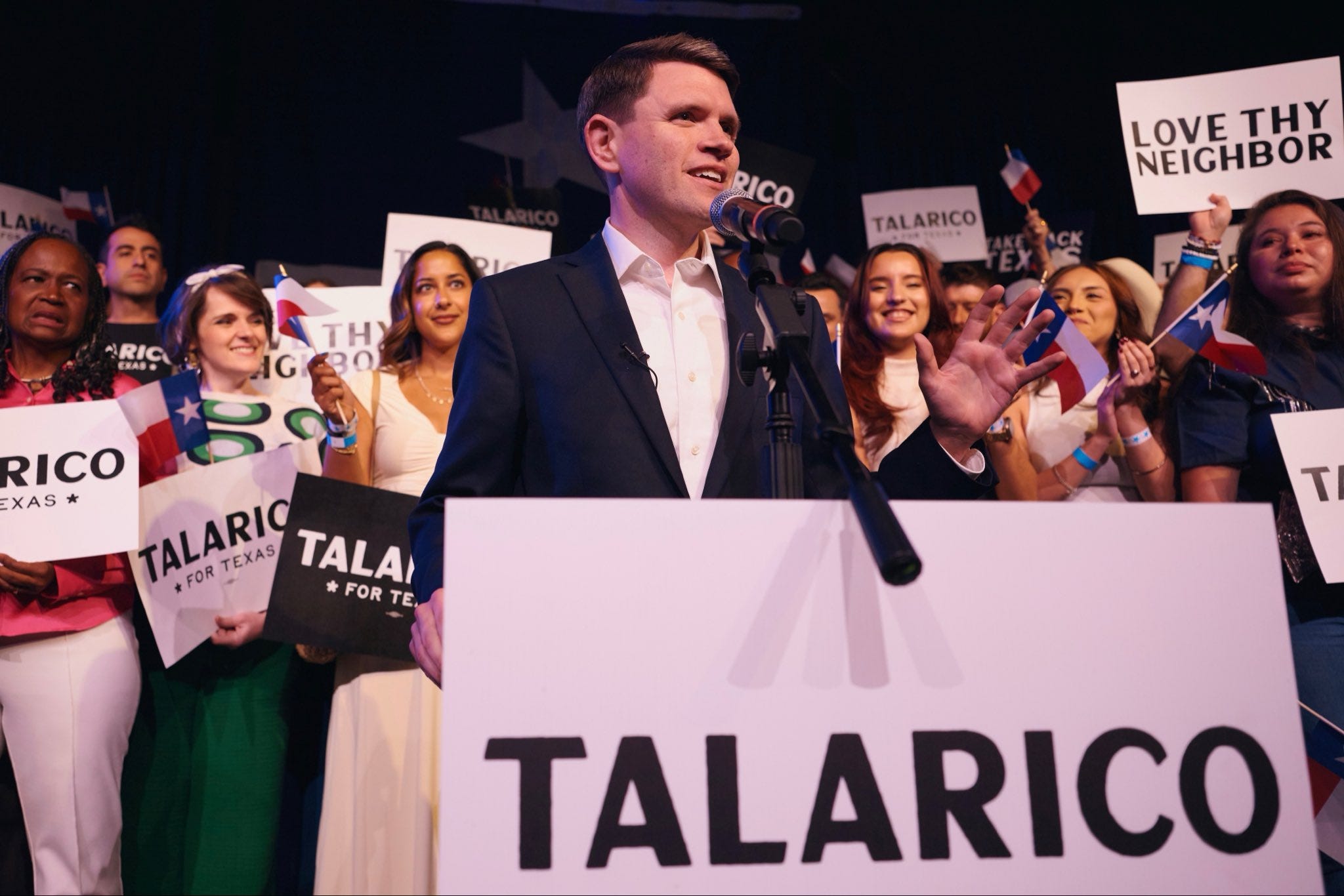
For all the talk of a potential Democratic Tea Party, and the idea that the party’s base is looking for candidates who will be maximally combative, concerns about electability seem to have dominated once again in a Democratic primary.
Notably, from the available polling, there wasn’t much evidence that either Talarico or Crockett had a quantifiable edge against their potential Republican opponents. (Polls showed that they were both equally long-shots.) But Crockett concerned some Democrats when she explicitly stated her belief that she wouldn’t need to win over Trump voters to flip a state the president has won three times.
Talarico, meanwhile, based his campaign on reaching out to voters skeptical of Democrats, even appearing on Joe Rogan’s podcast (where the influential host encouraged the 36-year-old state legislator to run for president).
Even without hard evidence that he was the more electable option, Talarico was the nominee that many Democratic strategists were hoping for — and that Republicans most feared, as evidenced by the GOP’s efforts to boost Crockett.
A weak Republican candidate? TBD.
John Cornyn is the incumbent Republican senator; he’s held this seat since 2002. He is a mainstay in Washington, having chaired the Senate GOP’s campaign arm for two cycles and served as Mitch McConnell’s No. 2 for six years. Last year, he was defeated in his bid to succeed McConnell as the Senate’s top Republican.
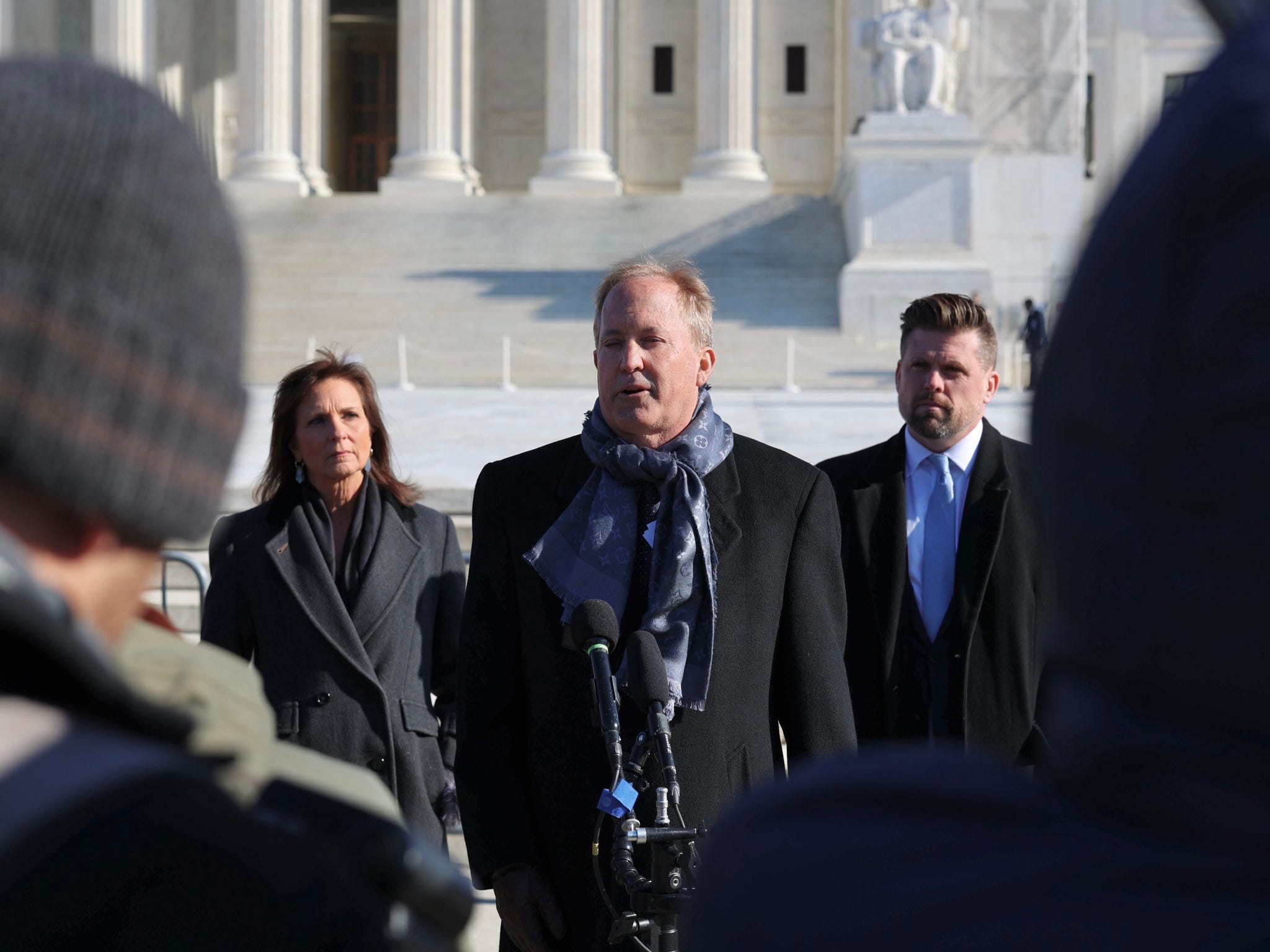
Cornyn is a rock-ribbed conservative, but he’s upset some Texas Republicans by brokering a bipartisan gun control bill after the Uvalde shooting in 2022 and by voting to certify the 2020 election. This year, he faced a primary challenge from Ken Paxton, the state’s attorney general.
Paxton has a, well, checkered past: in 2015, he was indicted for alleged securities fraud. (The charges were ultimately dismissed after Paxton agreed to pay restitution and perform community service.) In 2023, he was impeached by the Republican-led state House over allegations of bribery. (He was acquitted by the state Senate.) Last year, his wife filed for divorce, accusing Paxton of adultery.
But he is an ideological purist: while Cornyn was voting to certify the 2020 election, Paxton was helping lead Trump’s legal efforts to overturn it; while Cornyn was negotiating with Democrats on guns, Paxton was filing upwards of 100 lawsuits against the Biden administration.
Sensing blood in the water, another Republican jumped in to challenge Cornyn as well: Rep. Wesley Hunt, a former Army officer currently in his second term in the House.
In Texas, if no candidate gets more than 50% of the vote in the March primary, the two top vote-getters compete in a May 26 runoff. The three-way GOP primary ended up guaranteeing that Tuesday night ended without clarity as to who will face Talarico in the fall.
Cornyn ended up outperforming his polls, taking first place and 41.9% of the vote — though Paxton was close behind, nipping at his heels with 40.7%. Hunt finished in a distant third, with 13.5%.
Republicans are now girding for an intense, 12-week campaign between Cornyn and Paxton, with GOP strategists praying that the longtime senator will win out. The runoff is likely to be expensive: Cornyn and his backers have already spent more than $70 million on ads during the primary battle, setting a record for ad spending by a congressional incumbent. Paxton and his allies, meanwhile, spent only about $4 million on ads, which was enough to finish almost even with the senator.
The runoff will likely hinge on Trump’s endorsement: GOP leaders are begging the president to abandon his ally Paxton and support the more electable Cornyn, and they’re hopeful that Cornyn’s first-place finish will help him win the presidential nod.
It’s not even clear that a Talarico vs. Paxton race would be enough for Democrats to buck their decades-long losing streak in Texas, but it pretty much approximates the matchup that Democrats would have created in a lab: a smooth-tongued, religious Democrat put up against the most scandal-plagued, controversial Republican candidate imaginable. Democrats are also especially optimistic after turnout in their primary (2.2 million votes) outpaced turnout in the GOP primary (2.1 million votes), despite both parties hosting fiercely competitive contests, suggesting a potential enthusiasm advantage. And they certainly don’t mind the fact that Texas Republicans will spend the next 12 weeks battering each other, while the Democratic nominee is already set.
Just as winning Texas will be an uphill battle for Democrats, so will taking back the Senate majority overall. The party needs to protect all of its current seats (including in battleground states like Georgia and Michigan) and flip North Carolina and Maine and win two seats out of a hodgepodge of reach states including Ohio, Alaska, Iowa … or Texas.
Democrats are now two-for-three in their needed criteria to even have a shot in the Lone Star State. Both parties will be watching closely until May to see if that final domino clicks into place.
More results from last night’s primaries
Rep. Dan Crenshaw (R-TX) became the first congressional incumbent to lose to a primary challenger in the 2026 cycle, after being trounced by state Rep. Steve Toth (R-TX). Crenshaw’s support for Ukraine aid, as well as feuds with Ted Cruz and Tucker Carlson, helped fuel Toth’s MAGA-centric challenge. Crenshaw was the only House Republican from Texas not to receive Trump’s endorsement, underlining the president’s grip on the GOP.
Rep. Tony Gonzales (R-TX), who is battling allegations that he had an affair with an aide who then died by suicide last year, was forced into a runoff with a primary challenger, conservative activist Brandon Herrera. In last night’s vote, Herrera narrowly outperformed Gonzales, taking 43.3% of the vote to the congressman’s 41.7%.
Rep. Christian Menefee (D-TX) finished ahead of Rep. Al Green (D-TX), 46.1% to 44.2%, in a member-on-member battle forced by recent redistricting, but the fight will continue into a runoff as well. The race, between 37-year-old Menefee and 78-year-old Green, has become one of several generational fights splitting the Democratic Party this year.
After a pair of uncompetitive primary elections, North Carolina’s Senate matchup — set to be one of the most important in the country — is set: former Democratic Gov. Roy Cooper vs. Republican National Committee chair Michael Whatley.
Rep. Valerie Foushee (D-NC) is locked in a close primary battle with Durham County Commissioner Nida Allam. Foushee’s previous support for Israel has become a focal division point in the race, which Allam is running with the support of Bernie Sanders and other top progressives. With 95% of the vote in, Foushee currently boasts a tight lead, 49.2% to 48.2%; no winner has been declared.
Also too close to call: a re-nomination battle for North Carolina Senate president pro tempore Phil Berger, the most powerful Republican in the state. Trump waded into this primary race to boost Berger after the legislative leader championed a push to redraw North Carolina’s House map, but the incumbent currently trails conservative sheriff Sam Page by a mere two votes. Never say your vote doesn’t count, folks.
That’s right: All 49 other states have elected a statewide Democrat more recently than Texas. PolitiFact did the math back in 2012: 47 states have elected Democratic senators or governors more recently than 1994. That leaves Idaho, Utah, and Texas.
Idaho elected a Democratic state superintendent of public instruction as recently as 2002. Utah elected a Democratic attorney general in 1996. Texas is the only state not to have elected a Democrat statewide in the last 32 years.
If you’re curious, New York is the state with the longest-running drought for Republicans: the last GOP candidate to win statewide office there was Gov. George Pataki in 2002.
If Gabe give the Dems a two out of three chance, I’ll take it. I’d like to think that Talarico sets a standard, creates a template for a better way forward to not just winning a seat, but then flipping Congress, allowing them/us to do the more important work of returning to sane domestic and foreign policy and putting guardrails on the Queens real estate mob boss sundowning as president.
Thanks for this perspective, Gabe. Always appreciate your essays, even if sometimes I disagree with your tone (feeling you lean towards conservative), but for the most part I feel you succeed in presenting your findings and opinions in a non-partisan manner. I find it amusing that the conservative readers accuse you of leaning liberal more often than not. But it is extremely difficult as a human being not to perceive reality without bias.
To quote “The 7 Habits of Highly Effective People” by Stephen R. Covey:
"Each of us tends to think we see things as they are, that we are objective. But this is not the case. We see the world, not as it is, but as we are—or, as we are conditioned to see it. When we open our mouths to describe what we see, we in effect describe ourselves, our perceptions, our paradigms."